
Cracked Heat Exchanger: The Silent Failure
In the world of residential heating, there is no failure more critical than a cracked heat exchanger. The heat exchanger is the thin metal barrier that separates the poisonous combustion gases (including Carbon Monoxide) from the air that circulates through your Leesburg home. If this barrier is breached, the risk of CO infiltration becomes immediate. Ethan Adams and the Hvac Leesburg safety team have put together this guide to help you recognize the signs before a tragedy occurs.
Why Heat Exchangers Fail
Heat exchangers are subjected to extreme thermal stress. Every time your furnace turns on, the metal expands as it reaches 150°F+; when it turns off, it cools and contracts. Over 15 to 20 years, these thousands of thermal cycles can cause the metal to fatigue and develop stress fractures, especially in the "bends" or "eyelets" of the exchanger cells.
Common Warning Signs
While only a NATE-certified technician with a fiber-optic camera can confirm a crack, these are the symptoms a Leesburg homeowner can spot:
- Visible Corrosion or Soot: If you see black carbon buildup or heavy rust flakes inside the burner compartment, it's a sign of incomplete combustion often caused by a pressure breach.
- "Dancing" Flames: When the blower motor turns on, watch the furnace flames. If they began to flicker or "wave" around, it means the house air is leaking into the combustion chamber through a crack.
- Frequent Nuisance Lockouts: A failing heat exchanger can trip the "High-Limit" or "Flame-Rollout" safety switches, causing the system to shut down.
- Strange Odors: A persistent metallic or "exhaust-like" smell near the vents is a major red flag.
CO Alarm: The Last Line of Defense
If your Carbon Monoxide alarm sounds, DO NOT assume it's a battery issue. Evacuate the home, call 911, and then call a technical HVAC team. High-level CO poisoning can occur in minutes.
The Hvac Leesburg Safety Audit
During every heating tune-up, we perform a multi-point safety verification:
- Combustion Analysis: We use digital flue-gas analyzers to measure the exact PPM of Carbon Monoxide in the exhaust.
- Fiber-Optic Inspection: We route a high-resolution camera into the heat exchanger cells to look for micro-cracks that are invisible to the naked eye.
- Manifold Pressure Check: Ensuring the gas pressure isn't "over-firing," which is the leading cause of premature heat exchanger failure.
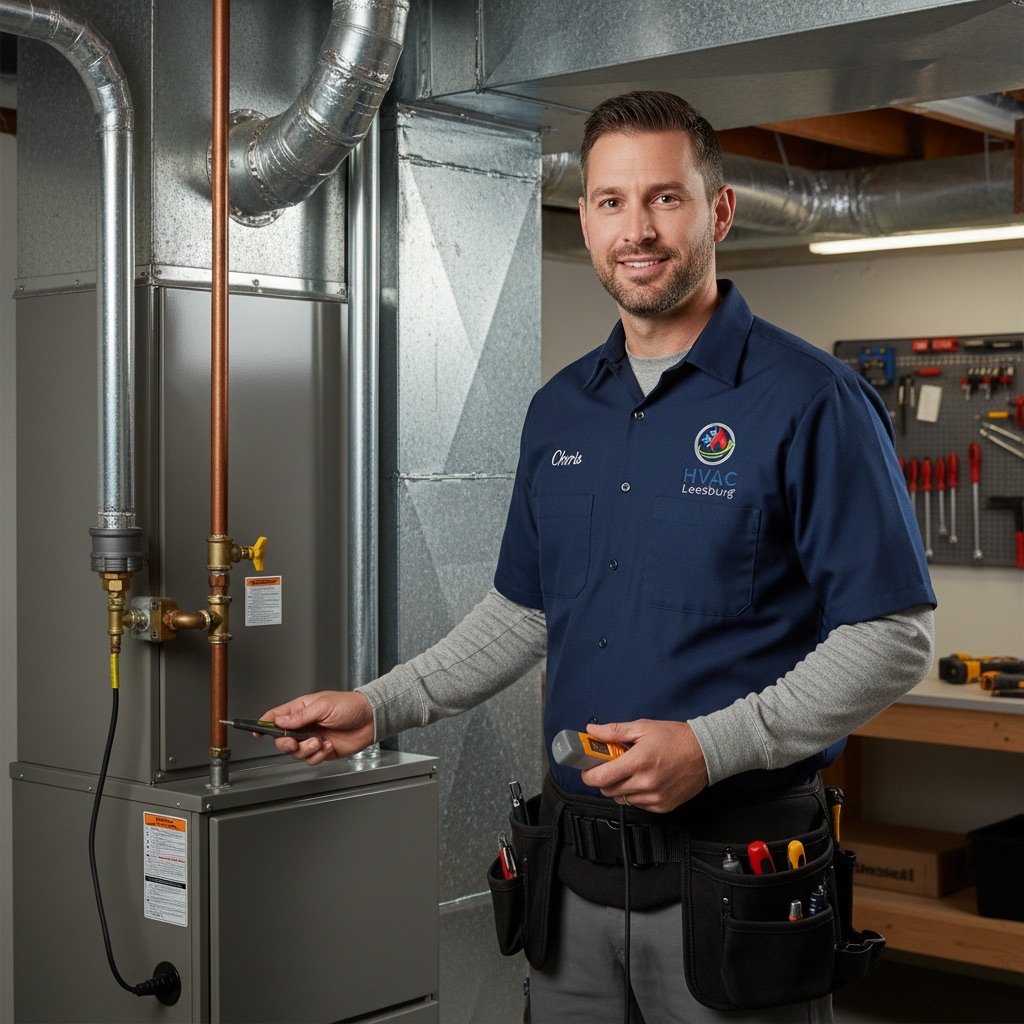
Ethan's Technical Note
"A furnace with a cracked heat exchanger is no longer a heater—it's a chimney for your home. We do not 'patch' or 'weld' heat exchangers. If the barrier is breached, the system must be decommissioned immediately for the safety of your family."
Worried About Your Furnace Safety?
Call the Leesburg safety experts today for a comprehensive combustion audit.
(571) 200-9224