HVAC Crisis Management: A Leesburg Homeowner's Guide
When an HVAC system fails during a Virginia heatwave or a winter freeze, it isn't just a comfort issue; it can quickly become a mechanical and safety emergency. From electrical fires to refrigerant leaks and gas exposure, knowing the correct technical protocols can save your equipment—and more importantly, your family. Ethan Adams and the Hvac Leesburg team have developed this emergency response guide for the Leesburg community.
Protocol #1: The Burning Smell (Electrical Emergency)
If you smell burning plastic, ozone, or see smoke near your vents or the indoor furnace, you likely have an "Electrical Arcing" event. This is often caused by a failing blower motor capacitor or a loose terminal on the control board.
- Action: Turn off the system at the thermostat AND flip the dedicated breaker in your electrical panel. Do not attempt to investigate the blower cabinet yourself; high-voltage capacitors can hold a charge even when the power is off.
Protocol #2: The "Hissing" Sound (Refrigerant Breach)
If you hear a loud hissing sound (like air escaping a tire) from the outdoor unit or the indoor coil, your system has suffered a "Catastrophic Leak." Modern R-410A refrigerant is under very high pressure (up to 400 PSI).
- Action: Turn off the system immediately. Refrigerant is heavier than air and can displace oxygen in low-lying areas like basements. If the leak is indoors, ventilate the area and move to another floor until a technician arrives with an electronic leak detector.
Protocol #3: Gas Odor (The 'Rotten Egg' Smell)
If you smell natural gas or propane, your furnace or gas line has a leak. This is a life-safety event.
- DO NOT flip any light switches or use a phone inside the house (sparks).
- Evacuate everyone from the home immediately.
- Call 911 from a safe distance outside.
- Call your gas utility and Hvac Leesburg for an emergency shut-off and repair.
Protocol #4: The AC Freeze-Up (Flood Risk)
If you see ice on the copper lines, you are at risk of a major water event once that ice melts. The secondary drain pan can overflow, damaging your ceilings or flooring.
- Action: Turn the AC to 'Off' and the Fan to 'On'. Place towels around the indoor unit. Check your "Condensate Pump" to ensure it is still functioning. If the water isn't draining, called for immediate dispatch to prevent property damage.
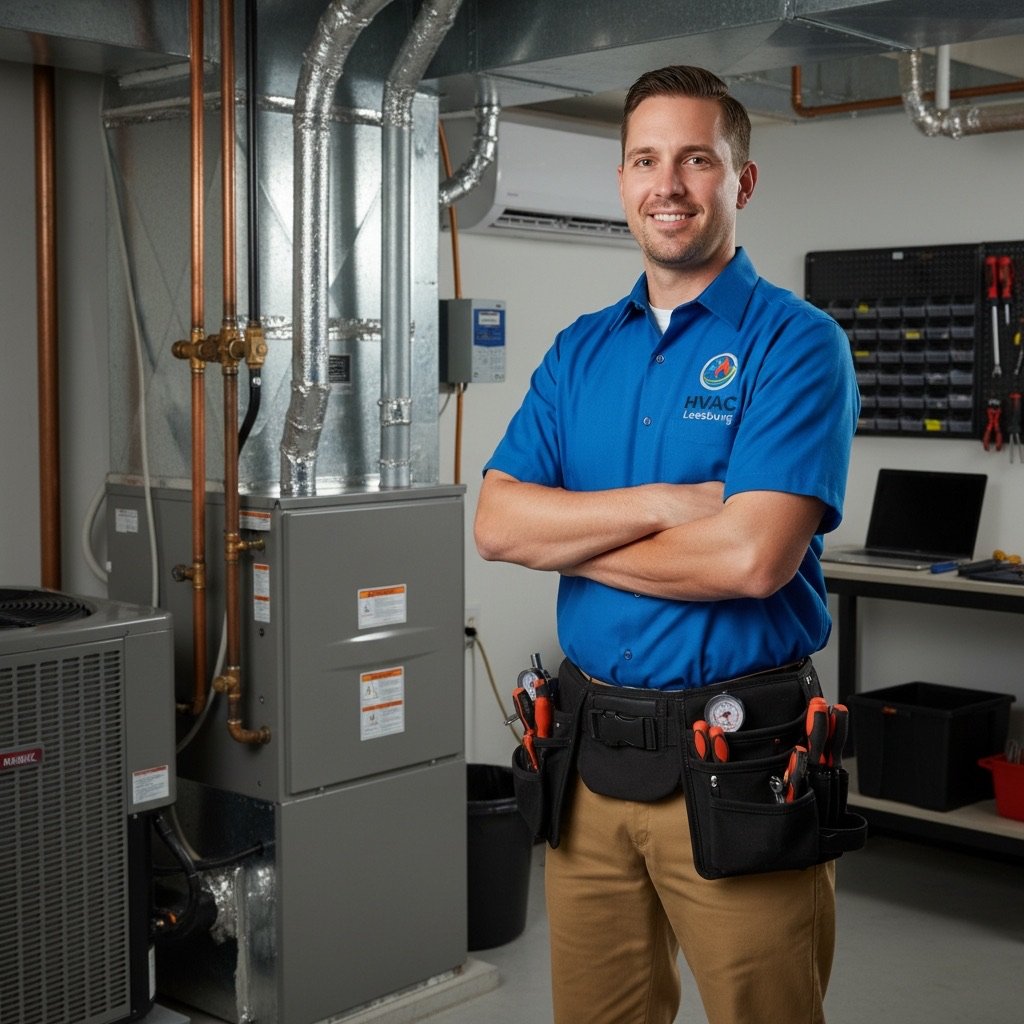
Ethan's Technical Note
"In an emergency, your first priority is safety, and your second is stopping 'consequential damage.' By knowing which breaker and gas valve controls your HVAC, you can prevent a $500 repair from becoming a $5,000 architectural restoration. We provide 24/7 rapid response specifically to manage these crisis moments for our Leesburg neighbors."
Experiencing a Mechanical Crisis?
Call our 24/7 Rapid Dispatch line for immediate technical intervention in Leesburg.
(571) 200-9224