
Winter is Coming: Protecting Your Leesburg HVAC System
In Northern Virginia, our winters can be deceptive. We fluctuate between mild 40-degree days and sub-zero mountain freezes that put incredible stress on heat pumps and gas furnaces alike. A system failure in the middle of a Leesburg ice storm isn't just an inconvenience—it's a risk to your home's plumbing and your family's safety. Ethan Adams and the Hvac Leesburg team recommend this technical checklist to ensure your system is prepared for the "Big Freeze."
Heat Pump Strategy: The "Defrost" Factor
If your home uses a heat pump, you will eventually notice ice building up on the outdoor unit. This is normal, provided the system is entering "Defrost Mode." In this mode, the system temporarily reverses itself to send heat *outside* to melt the ice. If you see a solid block of ice after 24 hours, your defrost board or sensors have failed. Prevent this by ensuring the outdoor unit stays clear of snow drifts and leaf debris.
The Gas Furnace Safety Audit
For those with natural gas or propane furnaces, winter prep is about "Combustion Integrity."
- Intake/Exhaust Clearances: Modern high-efficiency furnaces vent through PVC pipes on the side of your house. If snow drifts or ice block these pipes, the furnace will shut down instantly for safety. Ensure you have at least 12 inches of clearance around these vents.
- Condensate Drain Protection: High-efficiency furnaces create water (condensate). If this drain line passes through an unheated crawlspace or attic and isn't insulated, it can freeze, causing the furnace to flood or lock out.
Technical Alert: Auxiliary Heat (Emergency Heat)
If your heat pump fails, your thermostat has an "Emergency Heat" setting. Be careful—this uses electric resistance strips that are 3X more expensive than your heat pump. Use this only until Ethan Adams arrives to fix the primary system.
Thermostat Logistics for Winter
Avoid the "Boiler Effect"—turning the heat up to 80°F because you feel cold. A furnace or heat pump delivers the same temperature of air regardless of what the thermostat is set to. Raising it higher won't make the house get warm faster; it will just cause the system to over-shoot its goal and waste energy. Set a steady 68-70°F for the highest technical efficiency.
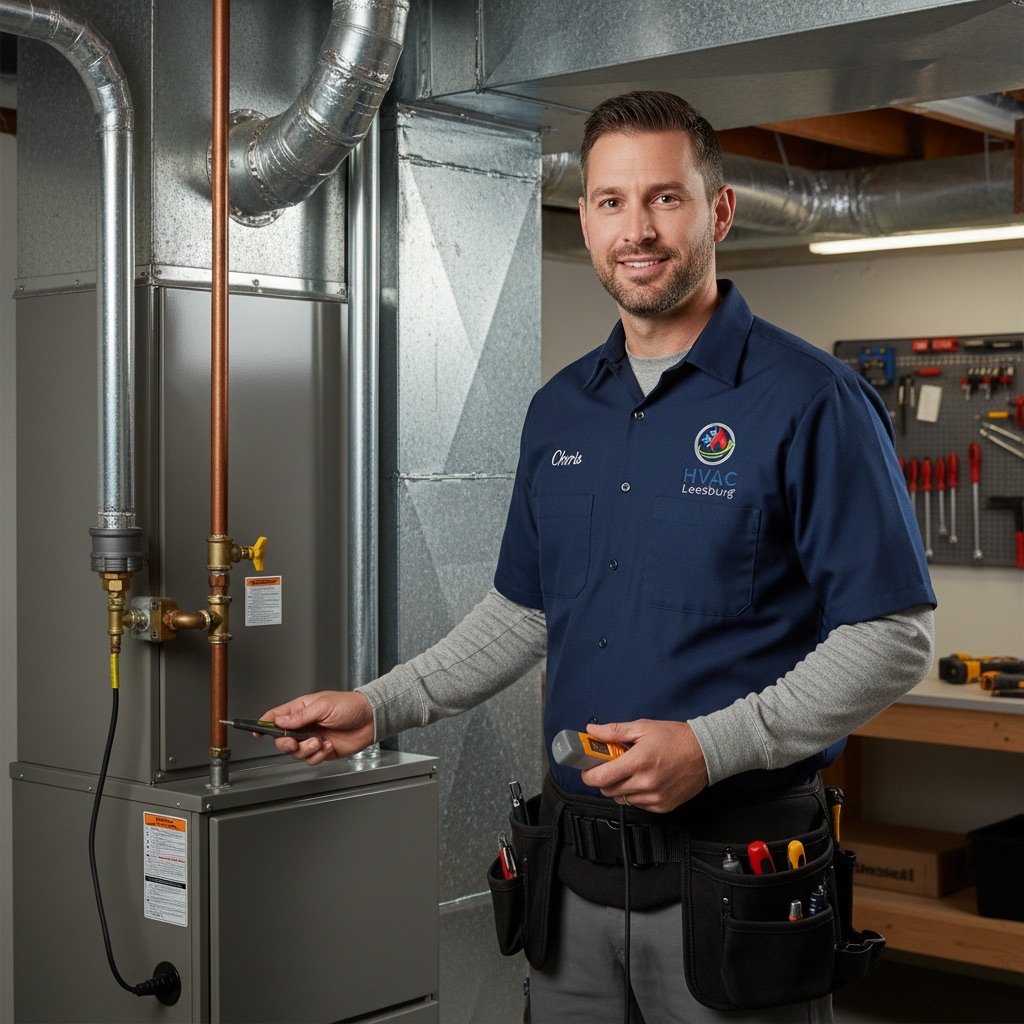
Ethan's Technical Note
"Winter HVAC failures in Leesburg are almost always predictable. By checking your refrigerant levels and heat exchanger integrity in October or November, we can ensure your system is ready for the technical strain of a sub-zero night. Don't wait for the first snowflake."
Winterize Your System Today
Call Ethan Adams for a Technical Winter Diagnostic and ensure your home stays warm All season.
(571) 200-9224